Introduction
Today’s customers interact with businesses through multiple channels before making a purchase. They may discover a brand on social media, visit its website, read online reviews, receive promotional emails, and finally make a purchase through an online store or physical location. This changing customer journey has made Omnichannel Marketing one of the most effective strategies for businesses looking to improve customer experience and increase sales.
Unlike traditional marketing, where each platform operates independently, omnichannel marketing creates a seamless and consistent experience across every customer touchpoint. Whether customers engage with your business on mobile, desktop, social media, email, or in-store, they receive the same brand message and personalized experience.
At Digital Karobari, we help businesses implement effective omnichannel marketing strategies that improve customer engagement, strengthen brand loyalty, and drive measurable business growth.
What is Omnichannel Marketing?
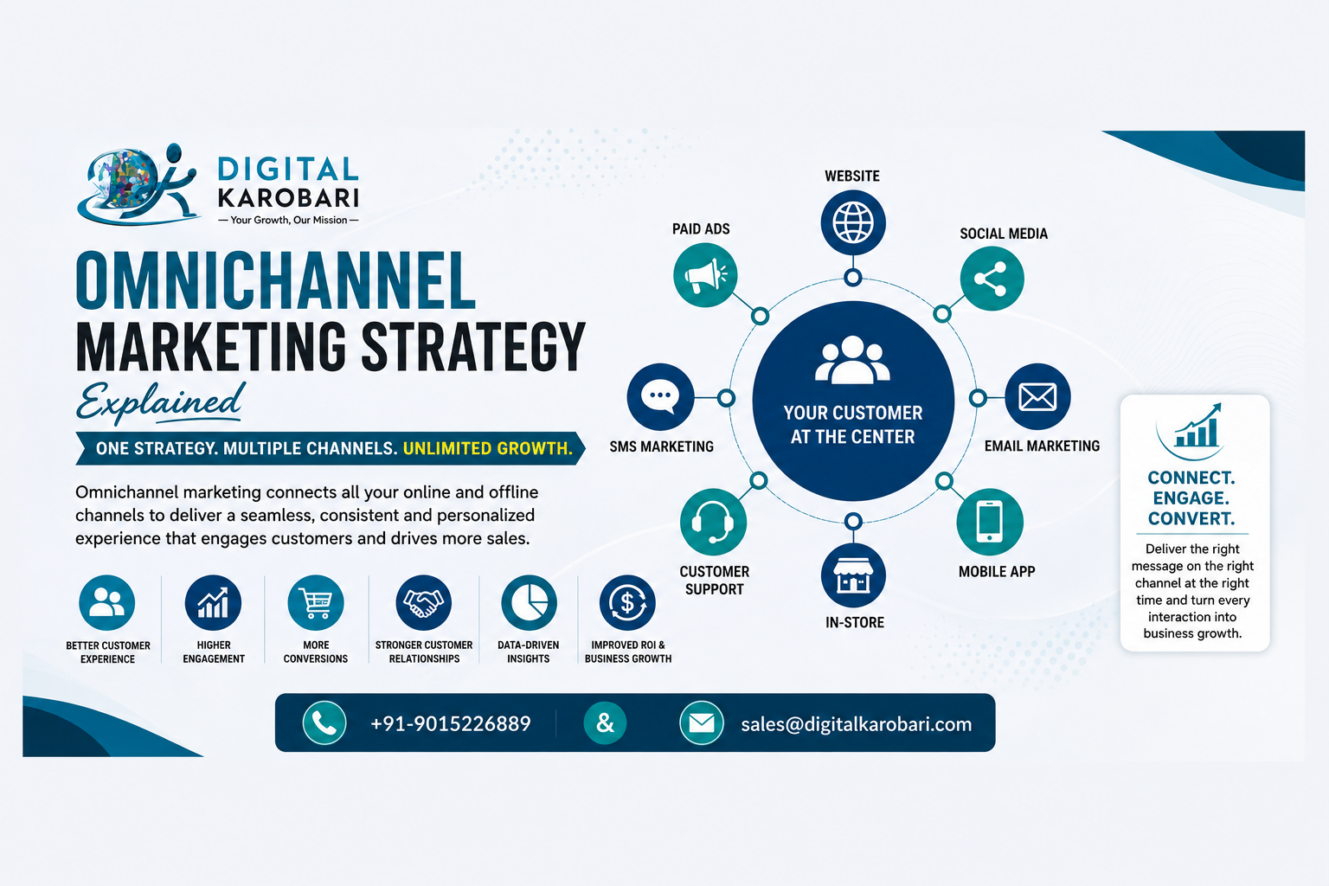
Omnichannel marketing is a customer-centric marketing strategy that integrates multiple online and offline channels to deliver a consistent and personalized brand experience. Instead of treating each platform separately, all channels work together to create a unified customer journey.
These channels may include:
Business Website
Social Media Platforms
Email Marketing
Google Search
Google Ads
Mobile Applications
SMS Marketing
WhatsApp Marketing
Online Marketplaces
Physical Stores
Customer Support
The primary goal is to ensure customers enjoy a smooth experience regardless of where or how they interact with your business.
Why Omnichannel Marketing Matters
Modern consumers expect businesses to recognize them across different platforms and provide a consistent experience. A customer may browse products on a smartphone, continue researching on a laptop, and complete the purchase later through an app or website. If the experience is disconnected, businesses risk losing potential customers.
An effective omnichannel strategy improves customer satisfaction, strengthens trust, increases engagement, and creates more opportunities for conversions. It also allows businesses to better understand customer behavior by collecting data from multiple touchpoints.
Benefits of Omnichannel Marketing
Better Customer Experience
Customers enjoy a seamless journey across multiple channels without interruptions. Consistent messaging and branding build trust and encourage long-term relationships.
Increased Customer Engagement
Businesses can interact with customers through their preferred communication channels, improving response rates and engagement.
Higher Conversion Rates
Providing relevant content and personalized recommendations across channels helps guide customers toward purchasing decisions, resulting in increased sales.
Improved Customer Retention
Consistent follow-ups, personalized offers, loyalty programs, and targeted communication encourage repeat purchases and strengthen customer loyalty.
Better Data Insights
Combining customer data from websites, social media, email campaigns, CRM systems, and mobile apps helps businesses better understand customer preferences and optimize future marketing campaigns.
Key Components of an Omnichannel Marketing Strategy
Understand Your Customer Journey
Analyze how customers discover, research, compare, and purchase your products or services. Mapping the customer journey helps identify opportunities to improve the overall experience.
Maintain Consistent Branding
Your logo, messaging, visuals, tone of voice, and offers should remain consistent across all digital and offline channels to build brand recognition and trust.
Personalize Customer Communication
Use customer data to deliver personalized recommendations, product suggestions, email campaigns, and promotional offers based on user behavior and interests.
Integrate Marketing Channels
Connect your website, CRM, email marketing platform, social media accounts, Google Ads, WhatsApp, and analytics tools to ensure all channels work together efficiently.
Use Marketing Automation
Automated workflows can send welcome emails, abandoned cart reminders, product recommendations, appointment confirmations, and follow-up messages, improving customer engagement while saving time.
Monitor Performance
Track key metrics such as website traffic, conversion rate, customer lifetime value, engagement rate, email performance, social media interactions, and return on investment (ROI). Continuous optimization ensures better campaign performance.
Best Practices for Omnichannel Marketing
Businesses should focus on delivering value rather than simply promoting products. Ensure that every communication is relevant, timely, and personalized. Optimize websites for mobile devices, maintain active social media profiles, respond quickly to customer inquiries, and use analytics to improve decision-making. Regularly test campaigns, refine messaging, and update strategies based on customer feedback and performance data.
Common Omnichannel Marketing Mistakes
Many businesses fail to integrate their marketing channels, resulting in inconsistent messaging and disconnected customer experiences. Other common mistakes include ignoring customer data, sending generic emails, neglecting mobile optimization, failing to personalize content, and not measuring campaign performance. Without proper planning and coordination, businesses may miss valuable opportunities to engage customers effectively.
Tools for Omnichannel Marketing
Several tools help businesses manage omnichannel marketing efficiently. Popular platforms include HubSpot, Salesforce, Google Analytics 4, Meta Business Suite, Mailchimp, Klaviyo, Zoho CRM, WhatsApp Business API, Google Ads, and Canva for content creation. These tools enable businesses to automate campaigns, track customer interactions, and optimize marketing performance.
Why Choose Digital Karobari for Omnichannel Marketing?
At Digital Karobari, we create customized omnichannel marketing strategies that help businesses connect with customers across every digital touchpoint. Our experienced team combines SEO, Google Ads, Social Media Marketing, Email Marketing, WhatsApp Marketing, Content Marketing, and Analytics to deliver a seamless customer experience that drives engagement and sales. By using data-driven insights and the latest digital marketing tools, we help businesses improve brand visibility, generate qualified leads, and achieve long-term growth.
Conclusion
Omnichannel marketing is no longer optional for businesses that want to stay competitive in today’s digital landscape. Customers expect consistent experiences across websites, social media, email, mobile apps, and other platforms. Businesses that successfully integrate these channels can improve customer satisfaction, strengthen brand loyalty, and increase conversions. By implementing a well-planned omnichannel strategy and partnering with experts like Digital Karobari, businesses can create meaningful customer experiences that lead to sustainable growth and long-term success.
Build a Seamless Customer Experience with Digital Karobari
Want to engage customers across every digital touchpoint and increase your sales? Digital Karobari offers expert omnichannel marketing solutions that integrate SEO, Google Ads, Social Media Marketing, Email Marketing, WhatsApp Marketing, and Content Marketing into one powerful strategy. Our data-driven approach helps businesses deliver personalized customer experiences, generate quality leads, and maximize marketing ROI.
Contact Digital Karobari today and create an omnichannel marketing strategy that drives measurable business growth.
Company Name: Digital Karobari
🌐: https://digitalkarobari.
📞: +91-9015226889
Frequently Asked Questions (FAQs)
- What is omnichannel marketing?
Omnichannel marketing is a strategy that integrates multiple online and offline channels to provide customers with a seamless and consistent brand experience. - How is omnichannel marketing different from multichannel marketing?
Multichannel marketing uses multiple platforms independently, while omnichannel marketing connects all channels to create one unified customer journey. - Why is omnichannel marketing important?
It improves customer experience, increases engagement, boosts conversions, strengthens brand loyalty, and helps businesses deliver personalized interactions across all touchpoints. - Which channels are included in an omnichannel marketing strategy?
Common channels include websites, social media, email marketing, Google Ads, WhatsApp, SMS, mobile apps, CRM systems, online marketplaces, and physical stores. - What tools are commonly used for omnichannel marketing?
Businesses often use Google Analytics 4, HubSpot, Salesforce, Zoho CRM, Mailchimp, Meta Business Suite, WhatsApp Business API, Google Ads, and marketing automation platforms. - How can Digital Karobari help with omnichannel marketing?
Digital Karobari develops customized omnichannel marketing strategies by integrating SEO, Google Ads, Social Media Marketing, Email Marketing, Content Marketing, and Analytics to improve customer engagement and business growth.
Leave a Reply