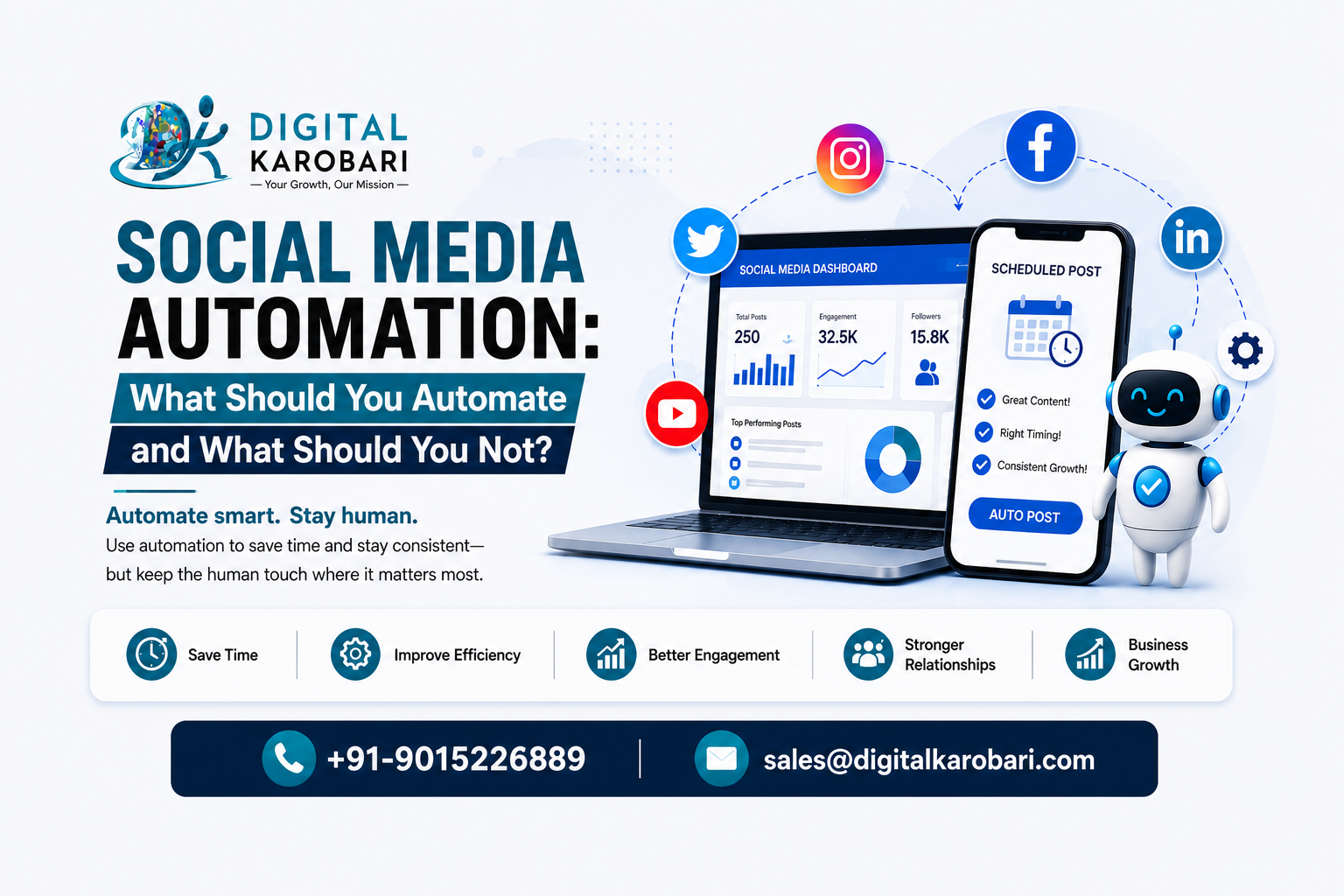
Social media has become an essential part of digital marketing, but managing multiple platforms consistently can be time-consuming. Businesses need to create content, schedule posts, respond to comments, monitor performance, engage with followers, and keep up with trends. This is where social media automation can make marketing more efficient.
However, automation does not mean that every part of social media marketing should be handled by software. While automation can save time and improve consistency, excessive automation can make a brand feel impersonal and disconnected from its audience.
The key is to understand what should be automated and what should remain human-driven.
What Is Social Media Automation?
Social media automation is the use of tools and software to perform repetitive social media marketing tasks automatically. These tools can help businesses schedule posts, publish content across platforms, generate reports, monitor mentions, and organize their social media workflow.
For example, instead of manually publishing an Instagram, Facebook, or LinkedIn post every day, a business can prepare content in advance and schedule it to be published at selected times.
Automation is particularly useful for businesses managing several social media channels because it reduces repetitive work and allows marketers to spend more time on strategy and creative activities.
Why Should Businesses Use Social Media Automation?
The biggest advantage of automation is time efficiency. Marketers can prepare several posts in advance rather than logging into different platforms every day.
Automation can also improve consistency. Regular posting helps businesses maintain their online presence, and scheduling tools make it easier to follow a content calendar.
Another benefit is better organization. Businesses can plan campaigns, schedule promotional content, coordinate posts across different platforms, and monitor performance from a centralized workflow.
However, automation should be used as a supporting tool rather than a replacement for marketing strategy and genuine audience interaction.
What Should You Automate?
Schedule Regular Posts
Post scheduling is one of the safest and most useful forms of social media automation. Businesses can prepare content ahead of time and schedule posts for specific dates and times.
This is especially useful for evergreen content, educational posts, product updates, company announcements, and promotional campaigns.
Scheduling also allows marketers to maintain a consistent publishing frequency without having to manually post every day.
Content Calendar Management
A social media content calendar can be partially automated using scheduling and workflow tools. Content can be organized according to campaigns, platforms, topics, and publishing dates.
This helps marketing teams avoid last-minute posting and maintain a balanced content mix.
Performance Reports
Generating basic social media reports is another task that can be automated. Tools can collect information such as reach, impressions, engagement, clicks, follower growth, and other performance indicators.
Automated reports save marketers from manually collecting data from every platform.
However, automating reporting does not mean automating analysis. A person should still interpret the data and determine what is working and what needs improvement.
Social Media Monitoring
Businesses can automate monitoring for specific brand names, product names, keywords, or mentions. This helps marketers identify conversations related to their business.
Monitoring automation can act as an early-warning system, allowing the marketing team to identify opportunities or potential problems quickly.
Repetitive Internal Workflows
Some behind-the-scenes marketing tasks can also be automated. For example, a team can create workflows for content approvals, assigning posts to team members, reminding employees about upcoming campaigns, or organizing published content.
These processes can reduce administrative work and improve team productivity.
What Should You NOT Automate?
Genuine Customer Conversations
Comments, questions, complaints, and direct messages often require context and empathy. Automatically responding to every interaction can make a business appear robotic.
Customers want to feel that they are communicating with a real person. Businesses should therefore use automation to identify or organize conversations but keep important interactions human.
Crisis Management
Negative reviews, complaints, controversial posts, or public criticism should never be handled entirely through automated responses.
A poorly timed automated post can make a difficult situation much worse. During a crisis, businesses should pause scheduled promotional content when appropriate and allow a responsible team member to assess the situation.
Trend-Based Content
Trending topics can change quickly. Automatically publishing content based on a predefined schedule without considering current events can create embarrassing or insensitive situations.
Trend-based content requires human judgment because marketers need to understand the context before connecting a trend with their brand.
Every Comment and Reply
Automation can help identify comments that require attention, but businesses should avoid sending the same generic response to every person.
A personalized reply can strengthen relationships and encourage further engagement. Simple interactions may sometimes be automated, but meaningful conversations should remain human.
Brand Strategy and Creative Direction
Automation tools can assist with content production and scheduling, but they should not determine the entire brand voice or marketing strategy.
Human marketers should decide what the brand stands for, who it wants to reach, what type of content it should publish, and how it should communicate with its audience.
Finding the Right Balance Between Automation and Human Interaction
The best social media strategy combines automation with human creativity.
Think of automation as a tool for handling repetitive work, while people remain responsible for strategy, creativity, relationships, and decision-making.
For example, a business can automate post scheduling and reporting while keeping customer conversations, creative campaigns, crisis communication, and trend analysis under human control.
This approach allows businesses to save time without sacrificing authenticity.
Common Social Media Automation Mistakes
One of the biggest mistakes is automating too much. Publishing the same content across every platform without adapting the message can make the brand feel generic.
Another mistake is ignoring audience responses because scheduled content is already prepared. Social media is designed for interaction, so businesses need to actively monitor their communities.
Using automation without reviewing analytics is another problem. Automation can make publishing easier, but marketers still need to evaluate engagement, conversions, audience behavior, and campaign performance.
Businesses should also regularly review scheduled content. If circumstances change, previously scheduled posts may become irrelevant or inappropriate.
How Digital Karobari Can Help
Social media automation works best when it is integrated into a broader social media marketing strategy. Digital Karobari can help businesses plan content, develop social media strategies, manage campaigns, improve engagement, and use digital marketing tools more effectively.
The objective should not simply be to publish more content. It should be to create a consistent, relevant, and engaging social media presence that supports business growth.
Conclusion
Social media automation can significantly reduce repetitive marketing work, improve consistency, and help businesses manage multiple platforms more efficiently. Scheduling posts, organizing content calendars, generating reports, monitoring mentions, and managing internal workflows are all suitable areas for automation.
At the same time, businesses should avoid automating activities that require empathy, creativity, context, and human judgment. Customer conversations, crisis communication, trend-based content, and brand strategy should remain human-driven.
The most effective approach is simple: automate repetitive tasks, but keep relationships and decisions human.
Want to Make Social Media Marketing More Efficient?
Let Digital Karobari help you build a smarter social media strategy that combines automation, creative content, audience engagement, and performance tracking. Get in touch with our team to create a social media approach designed around your business goals.
Company Name: Digital Karobari
🌐: https://digitalkarobari.
📞: +91-9015226889
FAQs
- What is social media automation?
Social media automation involves using software and tools to schedule, publish, monitor, and manage repetitive social media marketing activities. - What social media tasks should businesses automate?
Businesses can automate post scheduling, content calendar workflows, basic reporting, social media monitoring, and repetitive internal marketing tasks. - What should not be automated on social media?
Customer conversations, crisis communication, creative strategy, sensitive responses, and trend-based content should generally be handled by humans. - Is social media automation good for small businesses?
Yes. Automation can help small businesses save time, maintain consistent posting, and manage multiple social media channels with fewer resources. - Can social media automation reduce engagement?
Over-automation can reduce engagement if audiences receive generic responses or irrelevant content. Automation should support human interaction rather than replace it. - Should businesses automatically reply to comments?
Not every comment should receive an automated response. Meaningful questions, complaints, and conversations should receive personalized human responses. - Is social media automation the same as social media marketing?
No. Automation is a tool within social media marketing. A complete social media strategy also includes content creation, audience research, engagement, branding, analytics, and campaign planning. - How can a business use automation without losing authenticity?
Automate repetitive publishing and administrative tasks while keeping creative decisions, customer conversations, community engagement, and sensitive communications human.