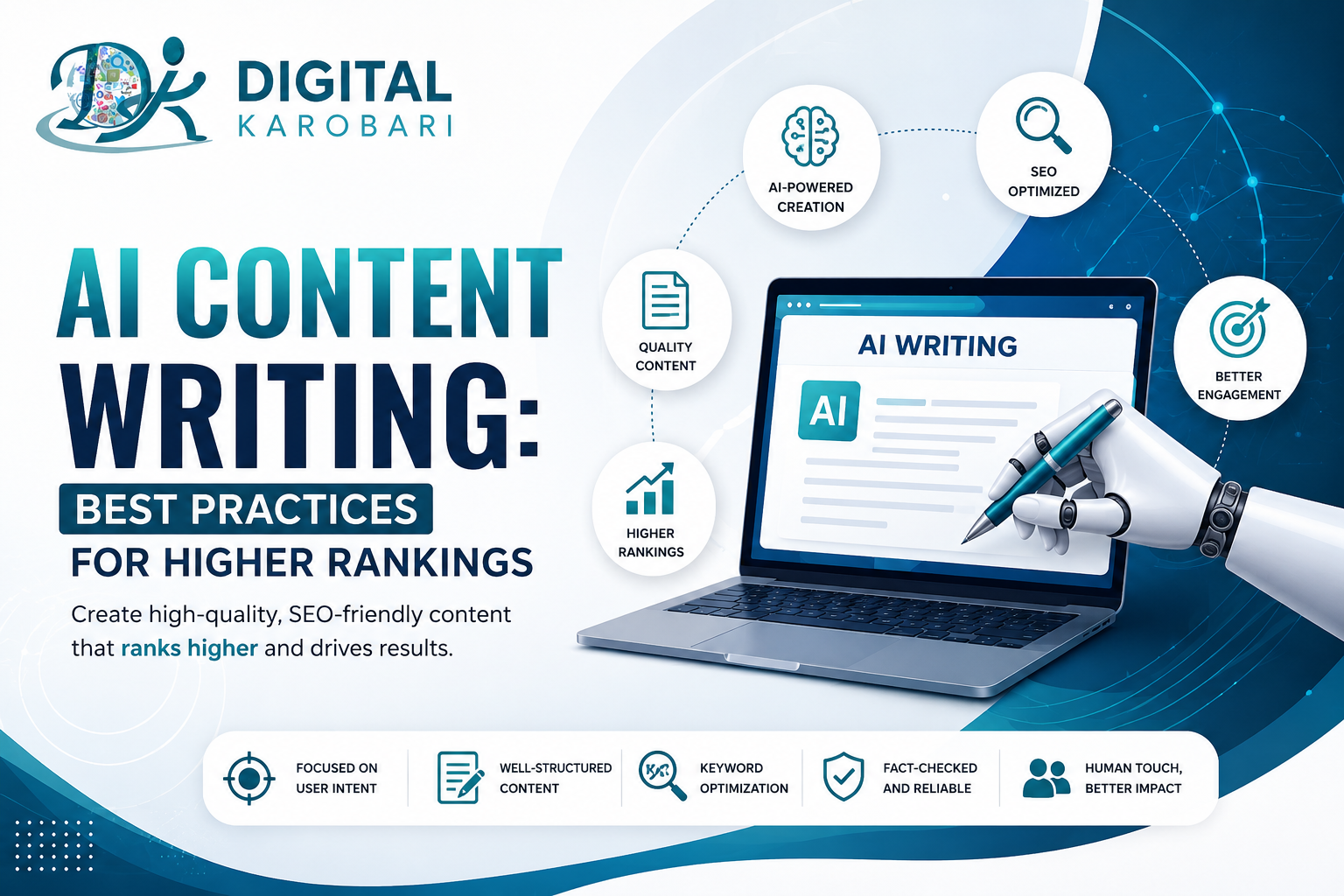
Artificial Intelligence (AI) has transformed the way businesses create content. From generating blog ideas to writing drafts and optimizing SEO, AI tools have become an essential part of modern content marketing. However, using AI effectively requires more than simply generating text. Search engines like Google prioritize content that is helpful, accurate, and created for users—not just algorithms.
In this blog, we’ll explore the best practices for AI content writing that can help improve your search engine rankings while delivering value to your audience.
What is AI Content Writing?
AI content writing involves using artificial intelligence tools such as ChatGPT, Gemini, or Claude to assist in creating digital content. These tools can generate blog posts, product descriptions, social media captions, email campaigns, and more.
While AI can save time and improve productivity, human oversight is essential to ensure originality, relevance, and quality.
Why AI Content Writing Matters
Businesses are adopting AI because it helps:
Speed up content creation
Generate fresh content ideas
Improve writing efficiency
Optimize content for SEO
Maintain publishing consistency
Support content marketing strategies
When used correctly, AI can enhance—not replace—human creativity.
Best Practices for AI Content Writing
Start with Keyword Research
Every successful blog begins with understanding what your audience is searching for.Keyword research is the foundation of successful AI content writing. Before generating content, identify the words and phrases your target audience is searching for. Focus on a primary keyword, supporting keywords, and long-tail keywords that match user intent. AI tools can then create content around these terms, increasing the chances of ranking higher in search results. Avoid stuffing keywords; instead, use them naturally throughout your headings, introduction, body, and conclusion.
Write for Humans First
Although AI can generate content quickly, your priority should always be the reader.
Focus on:
Answering user questions
Solving problems
Providing actionable advice
Using simple, conversational language
Search engines reward content that genuinely helps users.
Use a conversational tone, simple language, and logical flow to keep readers engaged. Google rewards content that satisfies user intent and offers a positive reading experience rather than content written solely for search engines.
Add Original Insights
AI often generates information that is widely available online. Make your content unique by including:
Real-world examples
Personal or business experiences
Case studies
Industry insights
Expert opinions
Originality increases credibility and engagement.
This makes your content more credible, engaging, and unique. Original content also helps establish your brand as an authority in your niche and encourages readers to trust your recommendations.
Fact-Check AI-Generated Content
AI tools can occasionally produce outdated or inaccurate information.
Before publishing:
Verify statistics
Confirm industry trends
Check product information
Review links and references
Accurate content builds trust with readers and search engines.
Cross-check your content with reliable sources and update any incorrect information. Fact-checking improves your credibility and ensures your audience receives accurate, trustworthy content.
Optimize Headings for SEO
Structure your content with clear headings.
Use:
H1 for the title
H2 for major sections
H3 for subtopics
This improves readability and helps search engines understand your content.
Include relevant keywords naturally in your headings to help search engines understand the topic. Clear headings also make it easier for readers to scan your content and quickly find the information they need.
Create High-Quality Meta Tags
Meta titles and descriptions are essential for improving your click-through rate from search engine results pages. Write an engaging meta title that includes your primary keyword and accurately represents the page content. Your meta description should summarize the article in 150–160 characters while encouraging users to click. Well-written meta tags improve visibility and attract more organic traffic.
Optimize every blog with:
SEO-friendly title
Compelling meta description
Relevant URL slug
These elements improve click-through rates from search results.
Improve Readability
Readers prefer content that is easy to scan.
Best practices include:
Short paragraphs
Bullet points
Numbered lists
Clear formatting
Simple vocabulary
Good readability also enhances user experience.
Include Internal and External Links
Internal links connect readers to other relevant pages or blog posts on your website, helping them discover more valuable content and improving site navigation. External links to reputable websites add credibility and support your claims. A balanced linking strategy also helps search engines understand your website structure and improves overall SEO performance.Strengthen your content by linking to:
Related blog posts
Service pages
Trusted external resources
This improves SEO and helps users explore additional information.
Optimize Images
Every image should include:
Descriptive file names
Keyword-rich alt text
Compressed file size
Relevant captions
Image optimization supports accessibility and search visibility. Proper image optimization improves accessibility, page speed, and image search visibility, contributing to better SEO.
Update Content Regularly
SEO is an ongoing process.
Review older articles to:
Refresh statistics
Add new examples
Update keywords
Improve formatting
Include recent trends
Fresh content is more likely to maintain strong rankings. Regular content updates help maintain search rankings, increase authority, and ensure readers always receive accurate information.
Common Mistakes to Avoid
Avoid relying entirely on AI without human review.
Common mistakes include:
Publishing unedited AI content
Keyword stuffing
Thin or repetitive content
Ignoring search intent
Using inaccurate information
Overlooking readability
Missing internal links
Writing only for search engines
Balancing AI efficiency with human expertise delivers the best results.
The Future of AI Content Writing
AI will continue to evolve, making content creation faster and more intelligent. However, successful brands will combine AI with human creativity, strategic thinking, and audience understanding.
The future belongs to content that is:
Helpful
Accurate
Experience-driven
Original
SEO-optimized
User-focused
Businesses that embrace this approach will achieve sustainable search visibility and stronger audience engagement.
Grow Your Business with Smarter AI Content
Looking to create SEO-friendly, engaging, and high-quality content that ranks on search engines? Digital Karobari helps businesses leverage AI-powered content strategies while maintaining originality, quality, and a human touch.
Our Content Marketing Services Include:
AI-Assisted SEO Content Writing
Blog Writing & Optimization
Website Content Development
SEO Strategy & Keyword Research
Content Marketing Solutions
AI Content Audits
On-Page SEO Optimization
Digital Marketing Consulting
Partner with Digital Karobari to create content that attracts the right audience, improves search rankings, and supports your long-term business growth.
Conclusion
AI content writing is a powerful tool for improving productivity and supporting SEO efforts. However, achieving higher search rankings requires more than AI-generated text. By combining AI with keyword research, original insights, fact-checking, readability, and a user-first approach, you can create valuable content that performs well in search engines and resonates with your audience.
At Digital Karobari, we believe AI should enhance human creativity—not replace it. Following these best practices will help you create content that builds authority, attracts organic traffic, and delivers lasting results.
FAQs
- What is AI content writing?
AI content writing uses artificial intelligence tools to assist in creating blogs, articles, website content, social media posts, emails, and other digital content. - Is AI-generated content good for SEO?
Yes, AI-generated content can perform well when it is edited, fact-checked, optimized for search intent, and provides genuine value to readers. - Can AI replace human content writers?
No. AI is a valuable assistant, but human writers are essential for adding creativity, expertise, accuracy, brand voice, and original insights. - Which AI tools are commonly used for content writing?
Popular AI writing tools include ChatGPT, Google Gemini, Claude, Jasper, and Microsoft Copilot. - How can I make AI-generated content unique?
Enhance it with original examples, expert opinions, updated information, case studies, and your brand’s unique perspective. - Does Google penalize AI-generated content?
Google does not penalize content simply because AI was used. It evaluates content based on quality, usefulness, originality, and whether it satisfies user intent. - What are the biggest mistakes in AI content writing?
Publishing without editing, keyword stuffing, ignoring user intent, using inaccurate information, and failing to provide unique value. - How often should AI-assisted content be updated?
Review and update important content every few months or whenever there are significant industry changes to keep it accurate and competitive.